
There are few places in India where mining, science, national strategy, tribal society and industrial development have remained intertwined for nearly six decades. Jadugoda in Jharkhand’s East Singhbhum district is one of them. What began in the 1960s as a project to develop an indigenous uranium mining and processing capability eventually became the foundation of a wider uranium production network. The journey began before the first ore was mined. In 1965, the Government journal Yojana documented the construction of the Jadugoda Uranium Mill and Mine Project, with workers, engineers and technical experts engaged in building what was then seen as an important requirement of India’s nuclear energy programme. Uranium mining began in 1967, the Uranium Corporation of India Limited (UCIL) was established on 4th October that year and the Jadugoda processing plant started operations in 1968. On 4th October 2026, UCIL is entering enter its 60th year, marking 59 years of Jadugoda’s Uranium journey.
Before Jadugoda Became a Mining Centre
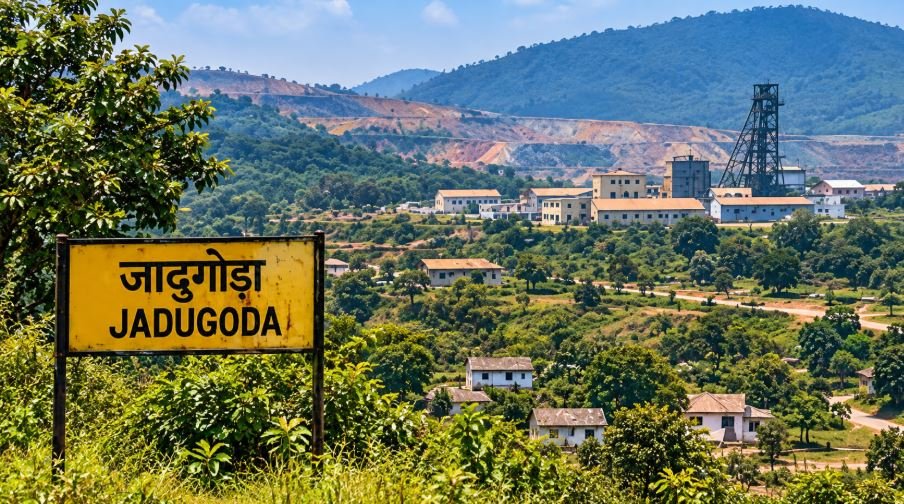
The Jadugoda of 1965 looked very different from the industrial complex known today. The shaft headframe was still under construction. Yojana recorded the structure as 45.5 metres high and noted that it had been erected in 240 hours. An ore crushing machine for the Uranium processing plant was also being installed. These early photographs are significant because they capture the beginning of the enterprise, not as an established mine, but as a project in which India was building its own technical and institutional capacity. The country’s nuclear programme required more than reactors; it also required a domestic fuel cycle, including Uranium exploration, mining and ore processing. Jadugoda, currently in Jharkhand state emerged in that larger national effort.
1967: The Year Jadugoda Changed India’s Uranium Story
Mining operations at Jadugoda began in 1967. According to UCIL’s official account cited in the source material, it became the country’s first uranium mine. Access to the underground workings involved a 640 meters deep vertical shaft, with the lowest production level at 555 meters. A supporting shaft was later developed to 905 meters. The same year brought another landmark. The UCIL was established on 4th October 1967, as a public sector undertaking under the Department of Atomic Energy. Its role was to meet the Uranium requirements of India’s nuclear energy programme. The Jadugoda mine and UCIL therefore developed almost simultaneously, creating an institutional base for Uranium production in the country.
From Ore to Yellowcake: The Technology Behind Jadugoda
Jadugoda’s importance did not end at extraction. Mining and processing capabilities developed together. The UCIL says ore from Jadugoda, Bhatin, Bagjata and Narwapahar is processed at the Jadugoda plant. The process involves crushing, wet grinding, preparation of slurry, chemical treatment, filtration and ion exchange before Uranium is recovered as magnesium di-uranate, commonly referred to as yellowcake. The plant was commissioned in 1968 and its capacity was subsequently expanded to handle ore from additional mines. Over the years, this created a specialised pool of expertise in Uranium mining, ore processing and associated technical operations. Jadugoda consequently became more than a mine. It developed into a center of specialised uranium mining skills.

One Mine Grew Into Seven Mining Units
The scale of operations has changed substantially since the early years. UCIL’s present description lists six underground mines in Jharkhand – Jadugoda, Bhatin, Narwapahar, Turamdih, Bagjata and Mohuldih along with the Banduhurang open cast mine. Ore from these operations is processed at the Jadugoda and Turamdih plants. The expansion represents a complete industrial chain. Geological exploration, mining, transportation, processing, engineering, radiation monitoring, environmental management and skilled manpower. The original Jadugoda operation thus became the starting point of a much larger mining and processing network.
The People Who Built Life Around the Mines
The story above ground is as important as the one below it. Mining created employment and new sources of income, while settlements grew around the industrial complex. Education, healthcare, housing, roads, drinking water and other basic facilities also developed in the region. UCIL’s older official material refers to employment and infrastructure related work in surrounding villages, including roads, bridges, medical facilities, school infrastructure and drinking water. Education and scholarship related initiatives for local tribal children have also been recorded.
But the social picture outside the company’s residential and industrial areas has been more complex. Jadugoda was already home to tribal communities whose lives were linked to agriculture, wage labour and traditional occupations before the mining industry expanded. A recent study cited in the source material interviewed 37 people from three villages near Jadugoda, including 33 members of Scheduled Tribe communities. Most of those interviewed depended on wage labour, while fewer were engaged in agriculture. The study does not represent the entire Jadugoda population, but it raises an important question about who owns land, who has regular employment and how far the benefits of industrial development have travelled into surrounding villages.
The Health and Environment Question Cannot Be Reduced to One Claim
Jadugoda’s most sensitive debate concerns health and the environment. Local communities and social organisations have periodically raised concerns about possible health effects, while official documents from UCIL and the Department of Atomic Energy have presented different findings and have said that concerns over radiation related health effects should not automatically be treated as established causation. The source material also refers to a 2015 Department of Atomic Energy position and a 2025 study involving 37 residents from three villages. Participants in that study reported concerns including respiratory problems, skin ailments, cancer, congenital conditions and reproductive health. The researchers, however, called for larger studies and further environmental investigation.
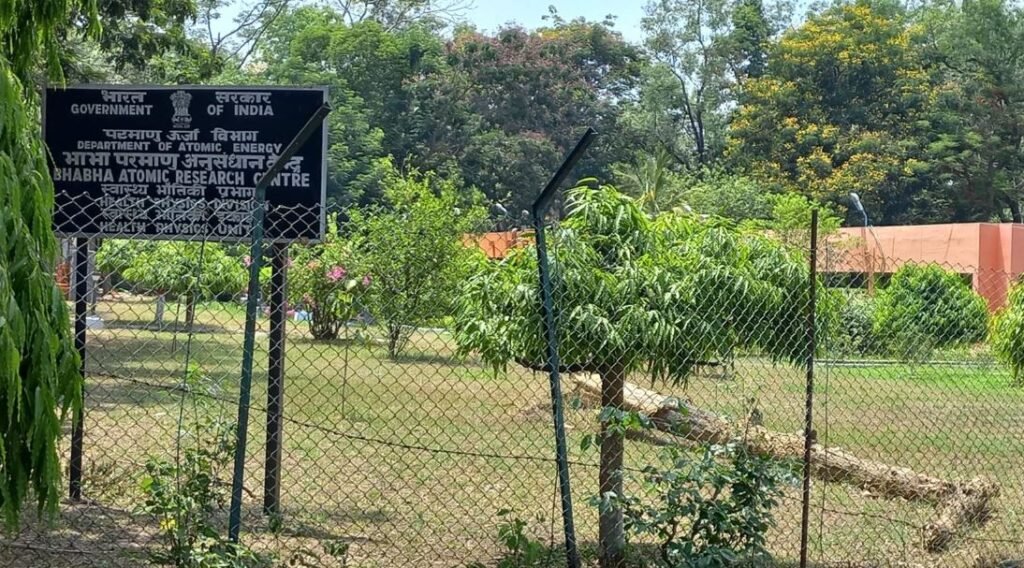
That distinction matters. The presence of a disease does not by itself establish that a particular industrial activity caused it. At the same time, the existence of radiation-safety systems does not by itself settle every environmental or public-health question. Long-term health records, environmental measurements, radiation data and properly designed epidemiological studies are needed to establish relationships. The source material notes that the Atomic Energy Regulatory Board regulates radiation safety at uranium mines and processing facilities and that monitoring includes workplace radiation, radon and its progeny, surface radioactivity and individual exposure of workers.
Tailings and the Environmental Legacy
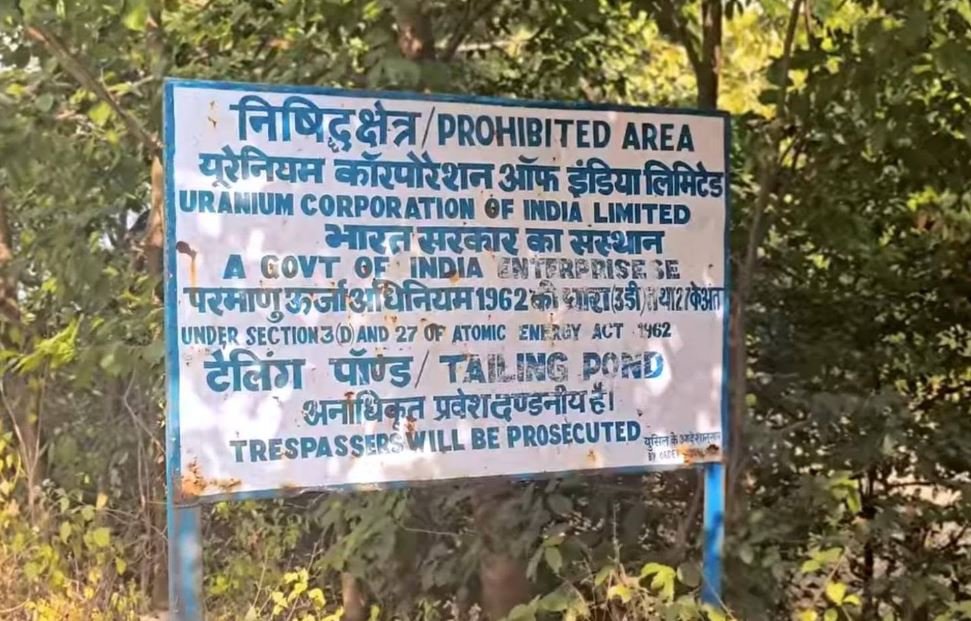
Another important part of Jadugoda’s story lies in what remains after uranium is extracted from the ore. The leftover material is known as tailings and requires controlled management. The source material notes that UCIL operates three tailings ponds at Jadugoda and that one older pond had reached its designated capacity, with a phase of rehabilitation completed. These facilities are therefore an important part of any assessment of the region’s environmental management.
UCIL continues to publish environmental statements and compliance reports for the Jadugoda mine and ore processing plant. The company’s records up to March 2026 include environmental documentation and compliance reporting. For a mining operation with a history stretching over nearly six decades, production is only one measure of performance. Waste management, water and land protection, worker safety, environmental monitoring and communication with surrounding communities are equally important to its long term record.
After 59 Years, Jadugoda’s Story Is Still Being Written
In 1965, Jadugoda appeared in Yojana as a construction site where India was attempting to create a new industrial and scientific capability. In 1967, Uranium mining began and UCIL came into existence. In 1968, the processing plant started operations. Over subsequent decades, more mines were added and the experience gained at Jadugoda became part of a wider uranium mining system.
That history cannot be described only as an industrial success story, nor can it be reduced to a list of environmental concerns. It is the story of scientists, engineers, miners, technicians, health physics personnel, workers, administrators and local communities whose lives became connected to a strategically important industry. For India, Jadugoda provided Uranium for the country’s nuclear programme and helped build specialised mining and processing capability. For the people living around the mines, however, Jadugoda is also home, a place of work, schools, markets, farms, families and memories.
On 4th October 2026, when the UCIL enters its 60th year, looking back at Jadugoda will therefore mean more than recalling the beginning of Uranium mining. It will mean looking at how a remote part of Jharkhand became part of India’s strategic industrial history and asking what the next six decades should mean for the people who live above the Uranium deposits. The future of Jadugoda will ultimately be measured not only by the Uranium extracted from beneath its soil, but also by the safety, transparency, environmental responsibility and quality of life sustained above it.
Also Read: Today’s Headlines – Business Jharkhand